
End-to-End Voicebot Testing for Voice-Driven AI Interactions
Validate voicebot availability, responsiveness, accuracy, and quality with a single platform.
PumpCX voicebot testing simulates real customer interactions on websites and applications, enabling objective validation of how voice-driven bots and virtual assistants behave in production-like conditions.
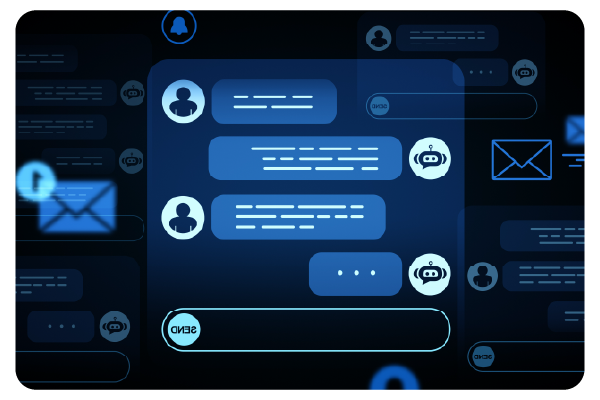

PumpCX Assures AI-Driven Customer Journeys for Leading Enterprises
Assure Voicebot Behavior in Digital CX Journeys
Insufficient voicebot testing often leads to incorrect answers, looping flows, and dead-end conversations that escalate to live agents, negatively impacting the customer experience and resulting in brand degradation, revenue risk, and customer churn. As conversational AI expands across self-service, support, and sales channels, manual voicebot testing cannot scale. Frequent changes, new intents, and channel variants introduce risk across digital CX. Without systematic voicebot QA, organizations lack reliable assurance that bots deliver expected, compliant, and on-brand outcomes.
The Impact of Poor Voicebot CX: Increased Cost and Risk at Scale
Abandoned self-service increases handle times and costs as more interactions shift back to assisted channels.
Inconsistent answers across bots, agents, and channels undermine brand credibility and trust in AI-driven journeys.
Undetected errors in conversational AI can expose the business to compliance, privacy, and reputational risk.
Trusted Voicebot Testing and Assurance with PumpCX
PumpCX provides a dedicated voicebot testing and virtual assistant QA solution that continuously validates bot behavior across real customer journeys. Synthetic digital traffic mirrors how customers navigate websites or apps, initiate chat sessions, and engage with voicebots or virtual assistants, providing an accurate view of CX quality.
With PumpCX Voicebot Testing, you can:
Automate voicebot testing for availability, responsiveness, and correctness of responses.
Validate end-to-end journeys that span web navigation, bot interactions, and agent handoffs.
Apply AI-led voice testing to expand test coverage by varying questions while preserving intent.
How PumpCX Voicebot Testing Validates Every Conversation
Simulated Voicebot Interactions in Real-World Conditions
PumpCX voicebot testing progresses through defined AI-led journeys to securely validate voicebot behavior. Each session is captured with detailed logs, recordings, and a full interaction video, allowing teams to review conversations end to end from the user’s perspective. Automated synthetic users validate digital CX by placing a call to engage with your voicebot, and then asking questions, following flows, and completing scripted journeys until session completion.
AI-Driven Test Variation for Better Intent Coverage
Because real conversations vary widely, manual voicebot testing is insufficient. PumpCX applies AI-driven variation to generate multiple phrasings for the same intent while preserving meaning. This validates NLP and NLU robustness and confirms correct routing and responses despite linguistic variation.
PumpCX Voicebot Testing enables teams to:
Generate multiple phrasings for a single intent.
Expand test coverage across different pronunciations, accents, and phrasing patterns.
Identify failures in intent recognition or incorrect flow routing.
Embedded Voicebot Testing for Existing CX Assurance Models
-
On-demand execution
For regression testing and immediate post-change validation
-
Scheduled execution
Continuously assess availability, latency, and behavior through PumpCX Insights Monitoring
-
Automated execution
Within DevOps or CI/CD pipelines, releases trigger voicebot regression tests before reaching customers
Continuous Voicebot Measurement & Synthetic Monitoring
Voicebot testing does not stop after a release. PumpCX Voicebot Measurement provides continuous visibility into voicebot availability, responsiveness, and behavior in live conditions, transforming one-off QA into ongoing digital CX assurance.
For each synthetic chat session, PumpCX captures:
Detailed logs of each step in the customer journey
The full sequence of voice communications exchanged
Recordings and screenshots of pages validating bot behavior
Synthetic chat sessions can run on a schedule through PumpCX Insights Monitoring to continuously validate voicebot availability and responsiveness between releases.
Customer Testimonials
PumpCX Voicebot Assurance Works in Any CX Environment
Vendor-independent assurance across global CX environments. Supporting leading contact center, digital and AI platforms. Built for complex, regulated, enterprise ecosystems.
Make Agentic AI in CX a Competitive Advantage—Not a Risk
Test every journey. Trust every outcome. Assure every release.
Learn how PumpCX is empowering enterprises to deploy agentic AI and CX with confidence. Complete the form below to request a demo.
Voicebot Testing FAQs for Digital CX Assurance
-
Voicebot testing is the process of systematically validating how a voicebot or voice-driven virtual assistant behaves across real user journeys, including availability, intent recognition, responses, and integration with other systems. PumpCX automates this testing so you can continuously assure voicebot quality at scale.
-
Manual voicebot testing relies on humans to place calls and interact with voice recordings, which is slow and hard to repeat consistently. PumpCX uses synthetic users, scriptable journeys, and full session recordings to deliver repeatable, data-rich voicebot QA with far greater coverage.
-
Yes. PumpCX supports voicebot testing and virtual assistant testing across web chat, in-app chat, and similar conversational interfaces, using the same Gherkin-based scripting and AI-driven variation.
-
You can create a baseline suite of voicebot regression tests that exercise core intents and journeys, then re-run those tests on-demand or automatically after each release. This ensures new changes do not break existing flows or degrade CX quality.
-
For every voicebot test, PumpCX captures logs, recordings, and a complete interaction sequence from initial call through to the end of the interaction. This makes it easy to share exact failures with developers, bot builders, and vendors to accelerate fixes.